Key points
- ABCDE stands for Asymmetry, Border, Colour, Diameter and Evolving.
- Not every melanoma fits these signs. Any new or changing spot is worth showing a doctor.
- Check your skin regularly, in good light, using a mirror or a helper for hard-to-see places.
Melanoma is a type of skin cancer that can develop in an existing mole or appear as a new spot. Checking your own skin and knowing what to look for helps you notice changes early, when skin cancers are generally easier to treat.
The ABCDE guide
- A for Asymmetry: the two halves of the spot do not match.
- B for Border: the edge is irregular, notched, blurred or ragged.
- C for Colour: the colour is uneven, with several shades of brown, black, blue, red, white or grey.
- D for Diameter: the spot is larger than about 6 millimetres, though melanomas can be smaller.
- E for Evolving: the spot is changing in size, shape, colour or height, or has new symptoms such as itching or bleeding.
When the ABCDE does not fit
Some melanomas, called nodular melanomas, do not follow the ABCDE pattern. They are often described with the letters EFG: Elevated, Firm to touch and Growing. They can grow quickly, so a raised, firm spot that is getting bigger should be checked promptly. Other skin cancers, such as basal cell and squamous cell carcinomas, can look like a pearly lump, a scaly patch or a sore that will not heal.
The ugly duckling sign
Most people’s moles look similar to each other. A spot that stands out as different from the rest, sometimes called an ugly duckling, is worth showing a doctor even if it does not match the ABCDE signs.
How to check your skin at home
- Choose a well-lit room and use a full-length mirror and a hand mirror.
- Check everywhere, including your scalp, behind your ears, between your fingers and toes, the soles of your feet and under your nails.
- Ask a partner or family member to check your back and scalp.
- Take photos of spots you want to keep an eye on, so you can compare them over time.
When to see a doctor
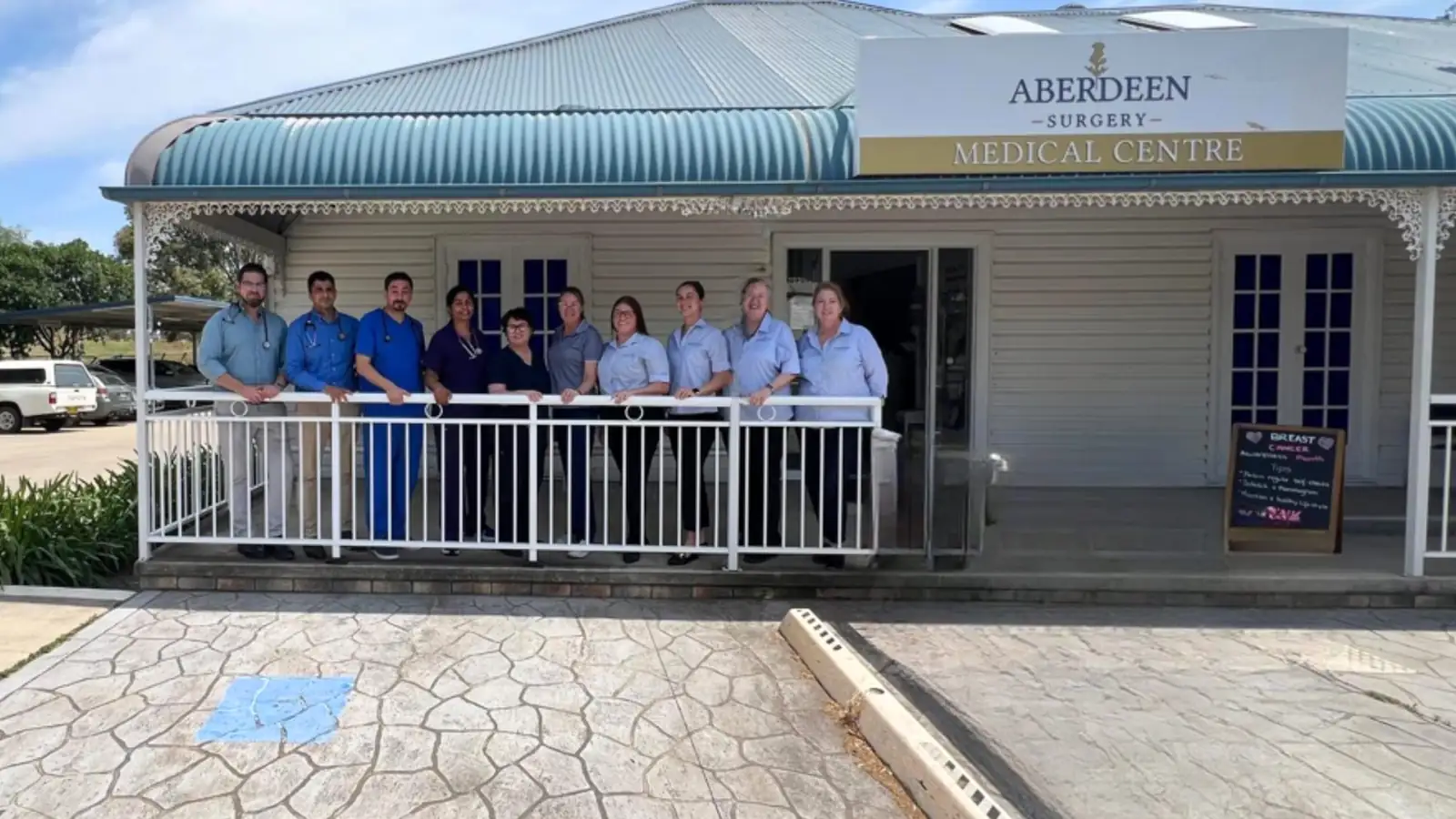
Book an appointment if you notice a new spot, a spot that is changing, or a spot that bleeds, itches or does not heal. Do not wait for your next routine check. At Aberdeen Surgery, skin cancer checks are available with GPs who have an interest in skin health, and GP consultations are bulk billed for eligible patients with a valid Medicare card.